
Code & binaries
Find cryptographic patterns in source code, compiled binaries, and configuration files.
Post-quantum security analysis
Rivet discovers cryptographic assets, scores quantum exposure, and maps findings to post-quantum replacements, so your team can plan migration from evidence.
Free 14-day trial · No credit card required
Illustrative output
$ rivet scan ./src
RSA-2048 · auth/tokens.py
Recommended: ML-DSA (FIPS 204)
ECDH P-256 · net/handshake.go
Recommended: ML-KEM (FIPS 203)
One platform
Three analyzer groups bring the essential inventory into one risk view.
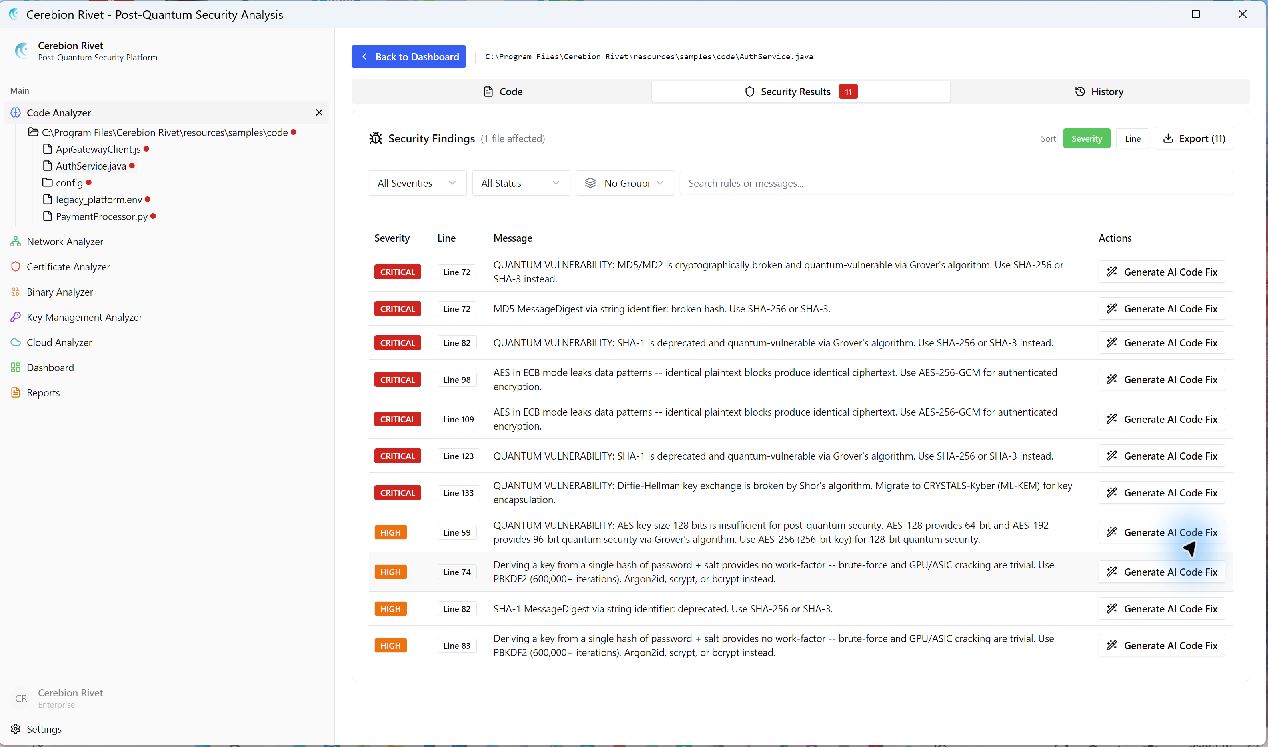
Find cryptographic patterns in source code, compiled binaries, and configuration files.
Review X.509 certificates, TLS configurations, live endpoints, and cipher suites.
Assess cloud services and key infrastructure across AWS, Azure, GCP, Vault, and more.
Advanced static analysis across 45+ programming languages plus config file formats.
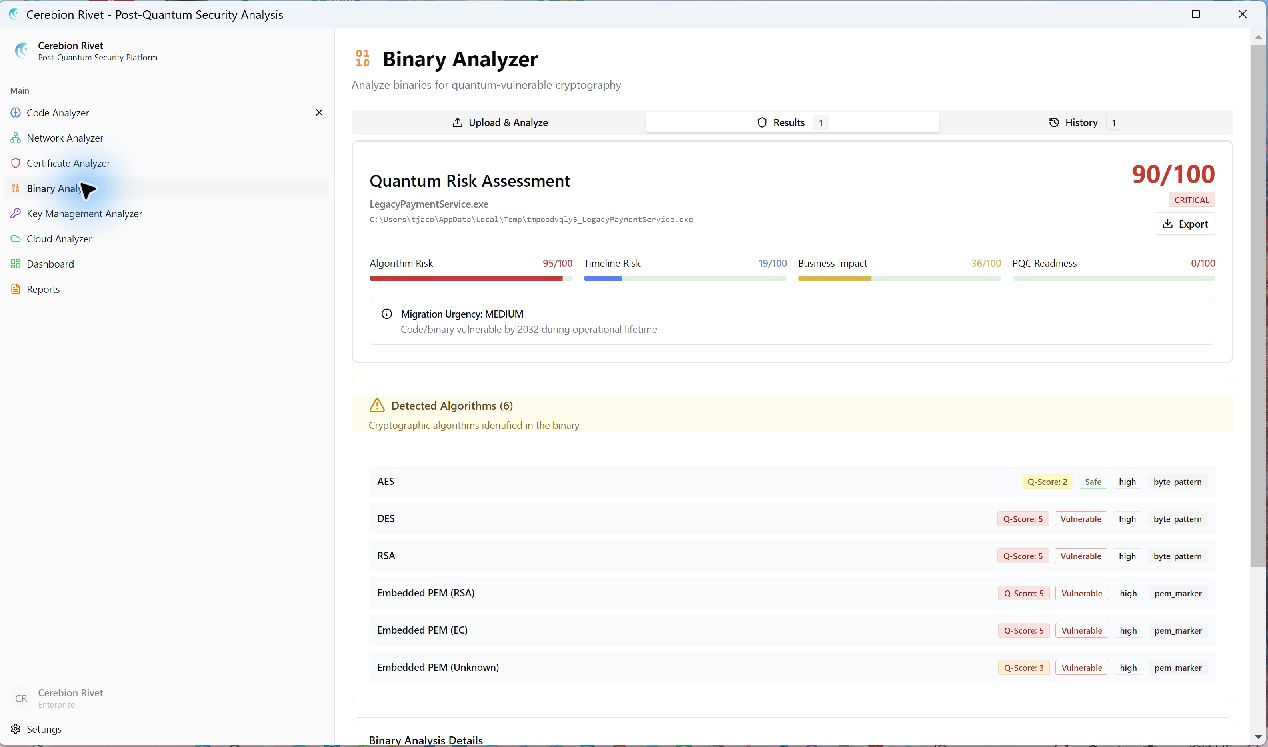
Analyze compiled binaries (EXE, DLL, ELF, Mach-O) for quantum-vulnerable cryptographic patterns.
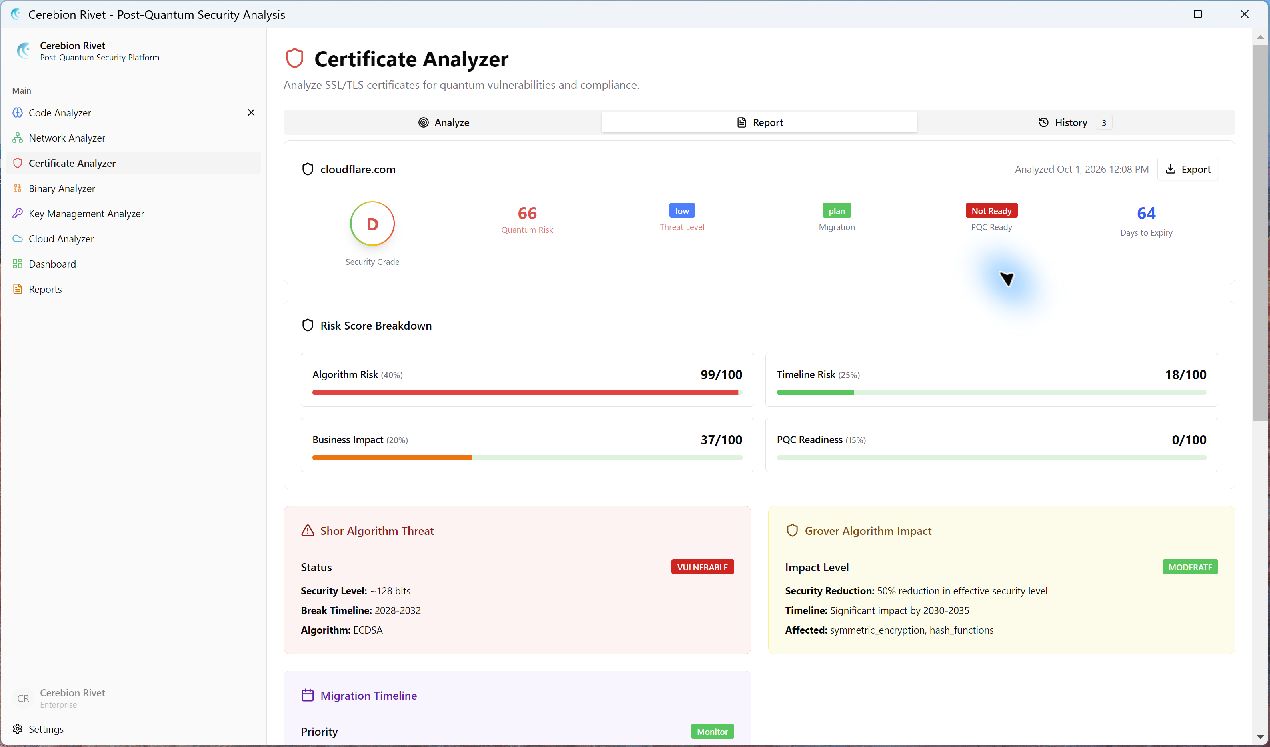
Analyze X.509 certificates and TLS configurations for algorithms that quantum computers will break.
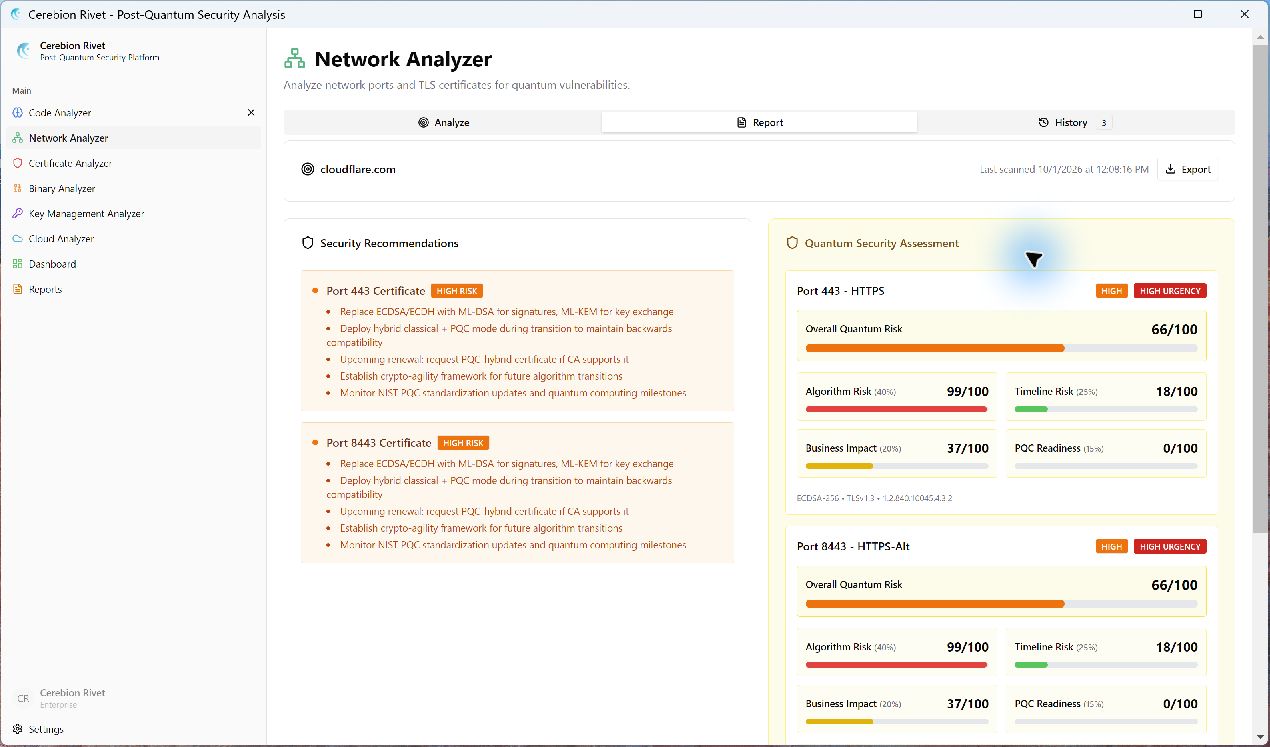
Analyze live hosts and network configurations for quantum-vulnerable TLS and cipher suites.
Scan live cloud infrastructure for quantum-vulnerable cryptography across AWS, Azure, and GCP.
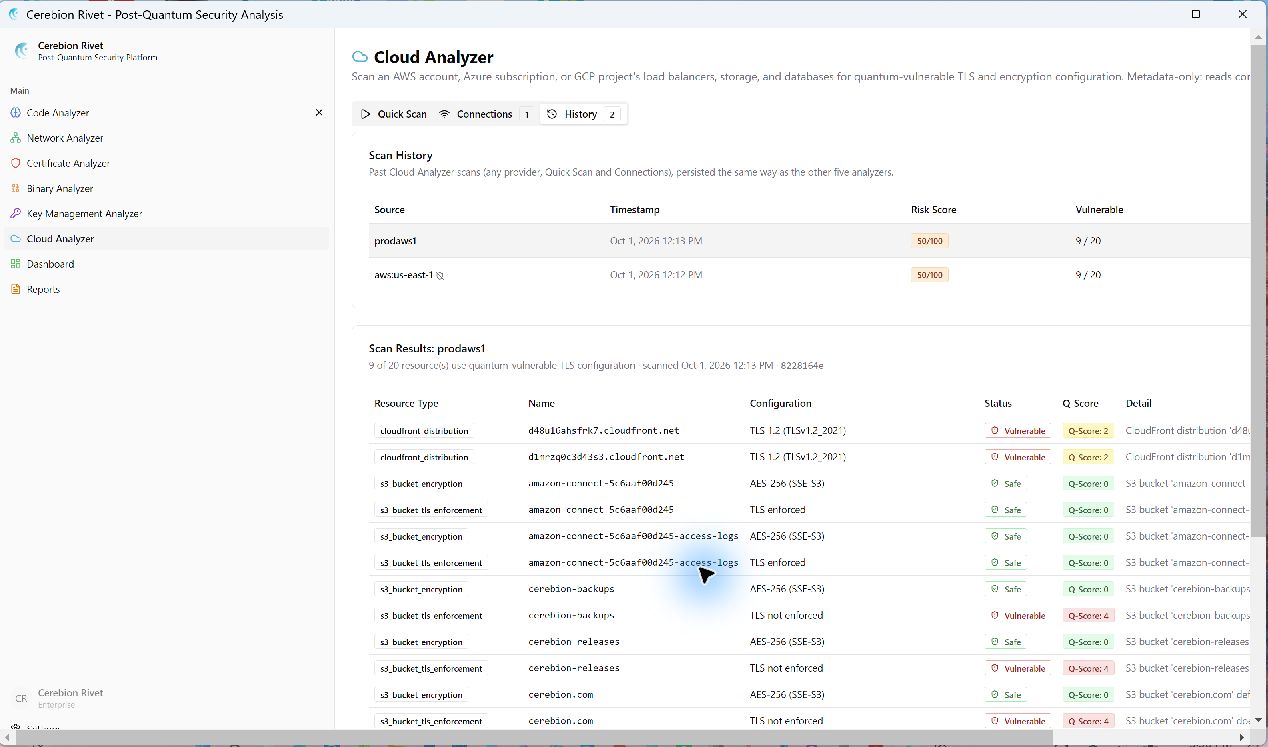
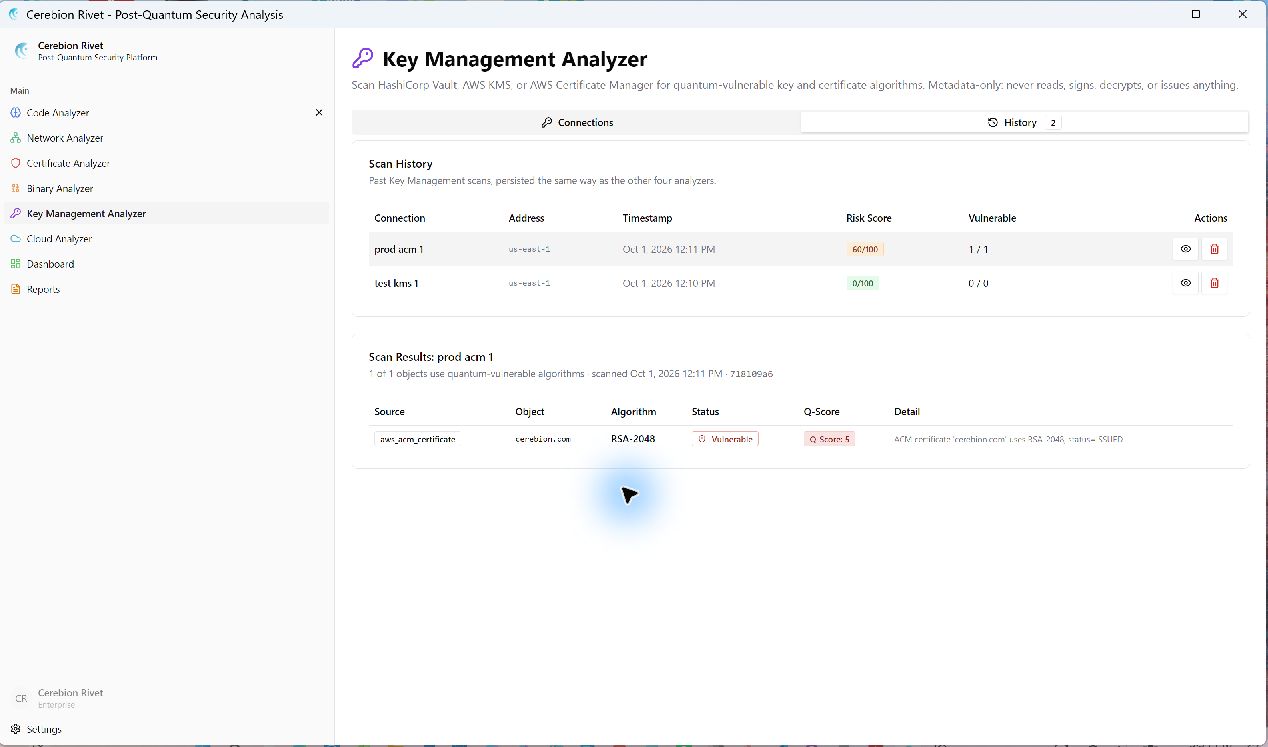
Scan live key and certificate infrastructure across HashiCorp Vault, AWS, Azure, GCP, Kubernetes, and Microsoft AD CS for quantum-vulnerable algorithms.
Swipe to see all six analyzers
A clear process
Move from scattered findings to a focused migration plan.
Cryptographic inventory
Vulnerability context
0–100 risk score
NIST migration path
Built for enterprise
Run scans where your teams work and choose how AI-assisted guidance is used.
Keep analysis inside your infrastructure.
Core scanning works in isolated environments.
Locally stored, digitally signed licenses.
AI is optional; rule-based guidance needs no API key.
Start with your cryptographic inventory
Start a free 14-day trial. No credit card required.